










To fix a non-responsive Touch Bar, you should restart your Mac first to clear temporary system hiccups. If that fails, reset the SMC and NVRAM on Intel Macs by holding Shift, Control, Option, and the power button for 10 seconds. This often resolves stubborn hardware-level glitches.
- Restart your Mac first.
- A quick reboot clears out temporary system hiccups and refreshes all running processes. In most cases, that’s all it takes to wake up the Touch Bar again. Try it before diving into deeper fixes.
- Reset NVRAM and SMC for persistent problems.
- When a simple restart fails, you might need to go deeper. Resetting the NVRAM (non-volatile RAM) and SMC (System Management Controller) often resolves stubborn hardware-level Touch Bar glitches. On Intel Macs, this clears corrupted settings that control display brightness, volume, and input device behavior. For M-series Macs, just restarting handles these resets automatically.
- Update macOS to the latest version.
- Apple rolls out bug fixes and Touch Bar improvements through macOS updates. Keeping your macOS current means you never miss those refinements. It’s a simple habit that prevents a lot of small headaches.
- You can restart Touch Bar processes directly from Terminal. Open the app and type a specific command to force-restart the Touch Bar without rebooting your whole Mac.
- A few Terminal commands target the Touch Bar’s background processes directly. Running them triggers a force-restart of just that component. Your system keeps running normally while the Touch Bar resets itself. This approach saves you from a full restart when the bar freezes or acts glitchy.
- Fix Touch Bar glitches and supercharge your Mac with smart utilities. It’s a practical way to test what works before you commit.
The MacBook Pro Touch Bar models from 2016 to 2020 looked sleek and promised real convenience. You could swipe to tweak brightness, tap to change volume, or skip tracks without touching the main screen. If those quick controls were your reason for buying that laptop, a dead Touch Bar feels like a personal betrayal. It’s especially maddening when the one feature you relied on just stops responding.

Don’t panic. You have several reliable ways to bring that strip back to life. I’ll walk you through each fix so you can get your MacBook Pro Touch Bar working again.
What Is the Touch Bar? A Quick Overview
Apple swapped the traditional function key row for something far more ambitious: the Touch Bar. This slim Retina touchscreen sits above the keyboard on select MacBook models. Instead of static keys, you get a dynamic strip that changes based on what you’re doing. Tap an emoji suggestion while typing, adjust a slider to change text color in Microsoft Word, or hit a play/pause button without lifting your hands. The whole idea was flexibility. Apple wanted the keyboard to adapt to your workflow, not the other way around. In practice, it meant the same physical strip could act as a scrubber in Final Cut Pro, a number pad in Numbers, or a row of familiar function keys when you hold the Fn button.

You probably noticed I used the past tense there, and for good reason. Apple discontinued the Touch Bar back in 2021. The company made that call because consumer interest never really took off. But here’s the thing: people genuinely love the physical feel of a keyboard. That’s exactly why laptops still ship with real keys instead of full touch panels. It’s also why mechanical keyboards have exploded in popularity over the last few years.
Troubleshooting your MacBook Touch Bar when it stops responding
When your MacBook Pro Touch Bar vanishes or starts acting sluggish, you need a plan. Maybe you’ve already restarted your laptop and updated to the latest macOS, but those fixes didn’t cut it. Here’s the thing: a stubborn app is often the culprit. Force quitting the misbehaving program can restore the Touch Bar in seconds, saving you from a full system reset.
#1. Force quit problematic apps
Sometimes an app that’s actively running can create problems that spread across your whole system, and the Touch Bar is no exception. When you force quit an application, you completely shut down every process tied to it, including background tasks you might not even see. That often clears up Touch Bar glitches in seconds. Here’s how to force quit an app:
- Click the Apple icon at the top-left corner of your screen.
- Then select Force Quit from the dropdown menu.
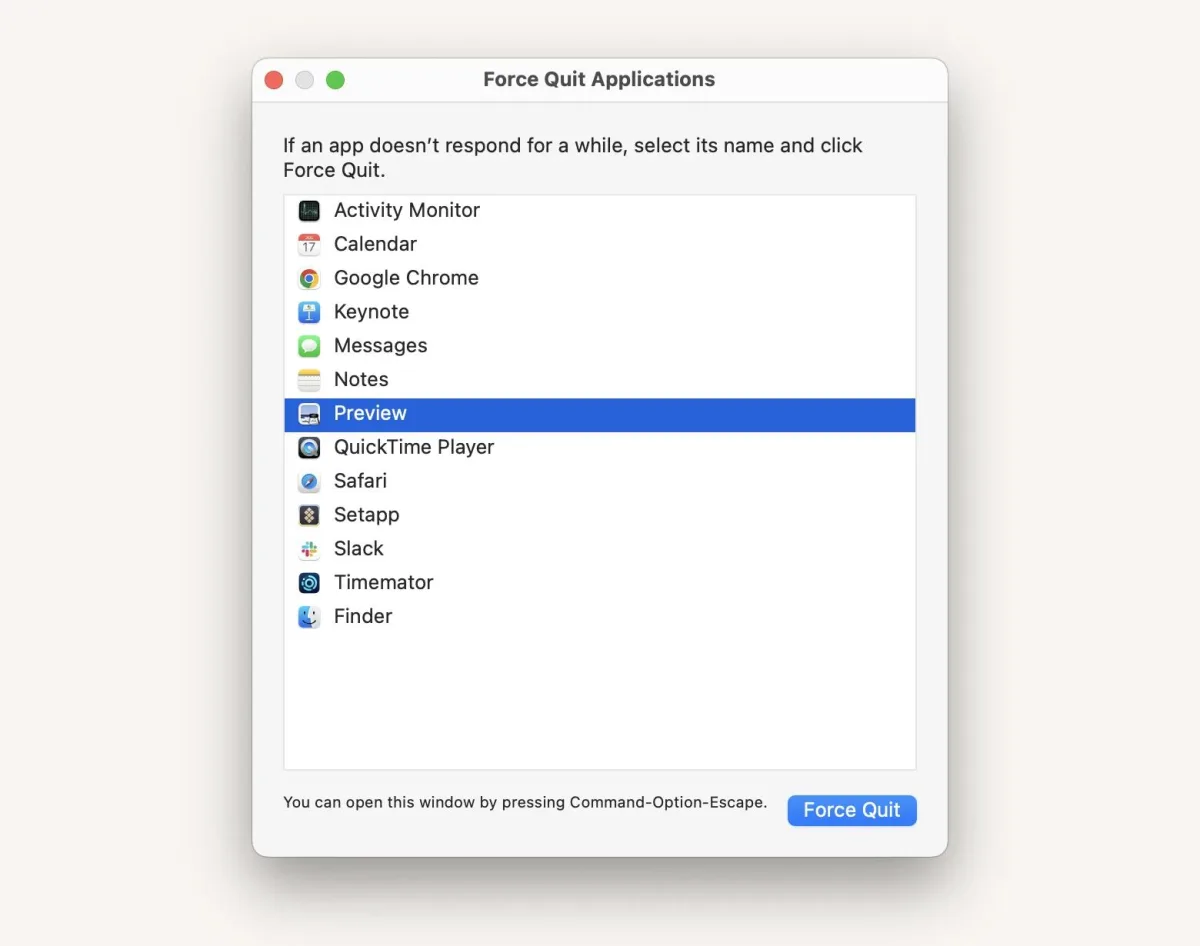
- Pick the troublesome app from the list, then click Force Quit. Need to shut down multiple apps at once? Hold the Command key while clicking each one to select them all before hitting the button.
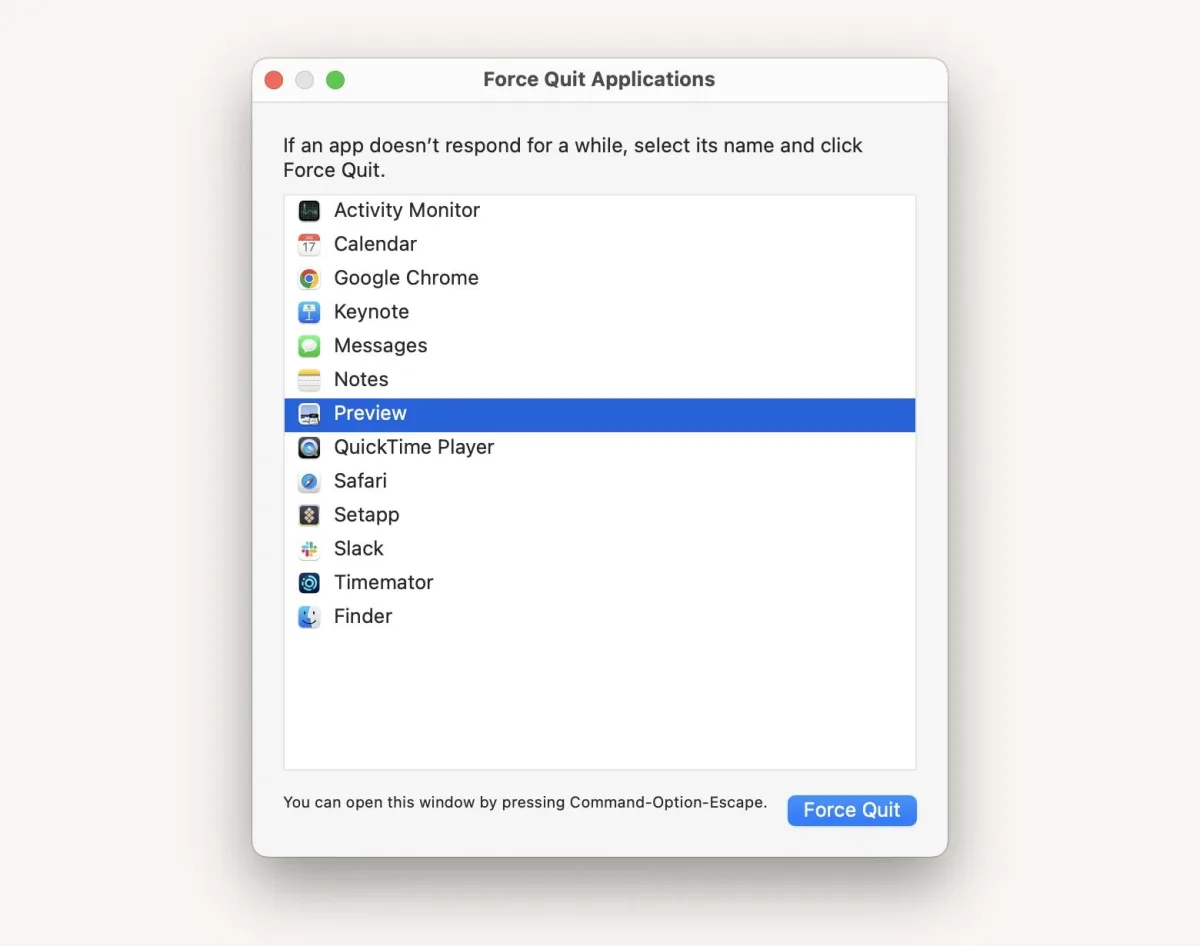
There’s a faster way if your mouse or trackpad is acting up. Press and hold Option + Command + Esc (the Escape key). That keyboard shortcut pulls up the Force Quit window instantly, no clicking required.
#2. Reset the Touch Bar
You have two distinct methods for resetting the Touch Bar. The first route runs through the Mac’s Activity Monitor, and it’s the quicker of the pair.
- Open Activity Monitor from Applications > Utilities, or launch it instantly with Spotlight Search (just press Command+Space and type the name).
- Inside Activity Monitor, type TouchBarServer into the search field. That process is the one you need to target.
- Find the app you want in the list, then click the X icon next to it.
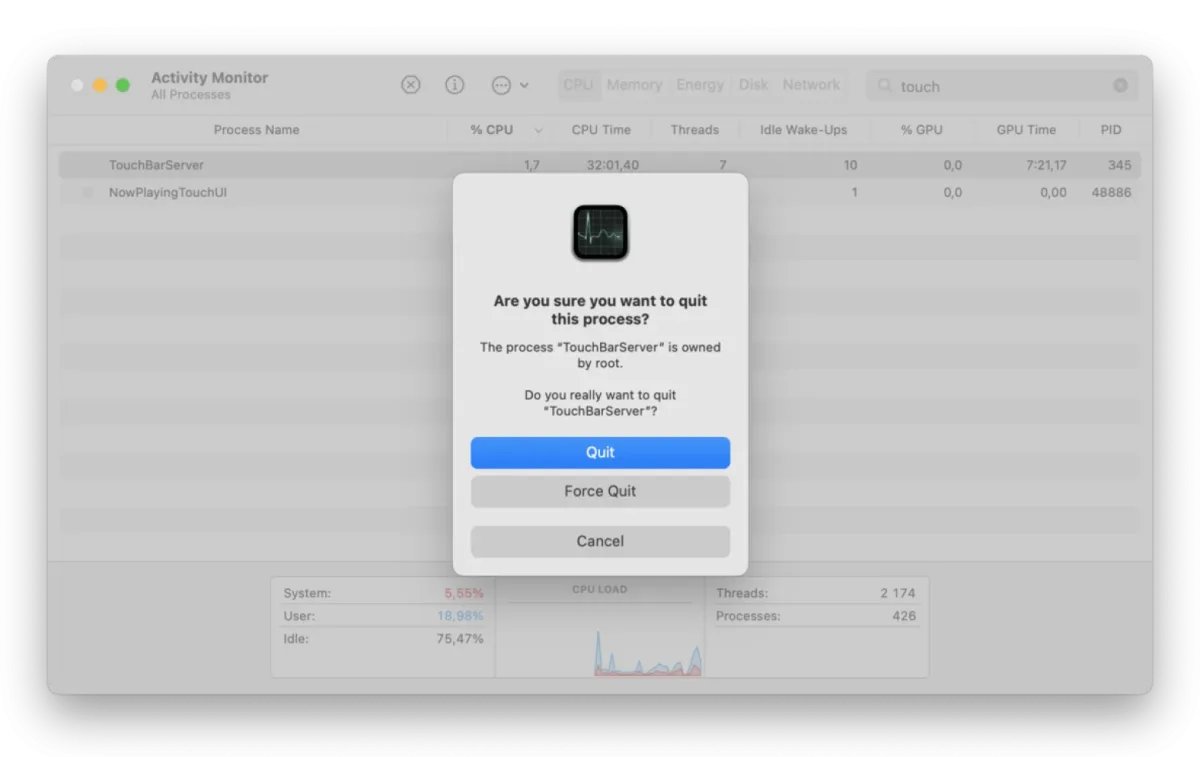
- A pop-up will appear. Click Force Quit to confirm your choice.
Don’t worry about losing the Touch Bar for good. TouchBarServer will automatically restart itself within a few seconds.
Use Terminal to restart the Touch Bar
- At the prompt, enter sudo pkill touchbarserver and hit Return.
- When asked, type your admin password and press Return again. Don’t worry if nothing appears on screen as you type. That’s normal.
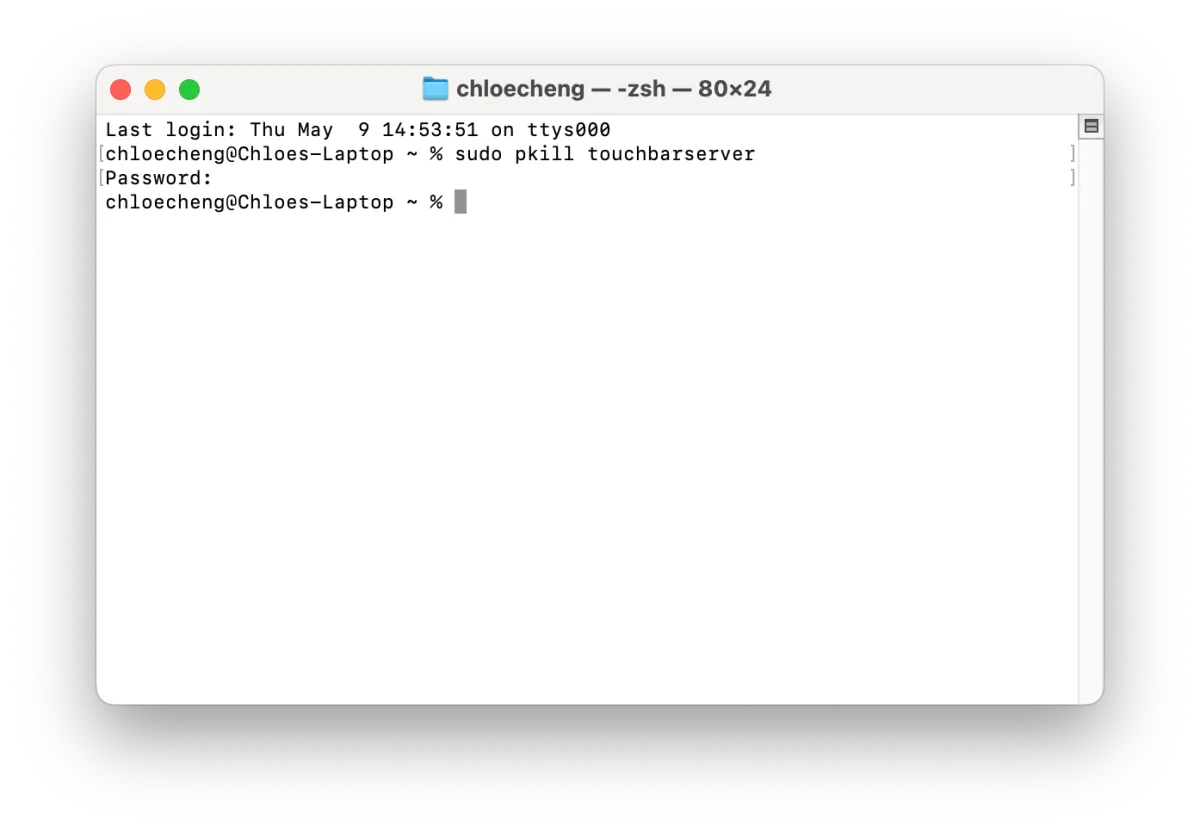
No confirmation message will appear, but the Touch Bar should restart on its own. Give it a few seconds to come back to life.
#3. Update Your macOS Version
Running the latest macOS is your first line of defense against security holes, random bugs, and performance hiccups. Yes, that includes Touch Bar troubles. If you haven’t checked for updates lately, here’s how to do it. Open System Settings, click General, then select Software Update. If an update is waiting, hit Update Now or Upgrade Now. Restart your Mac when prompted.
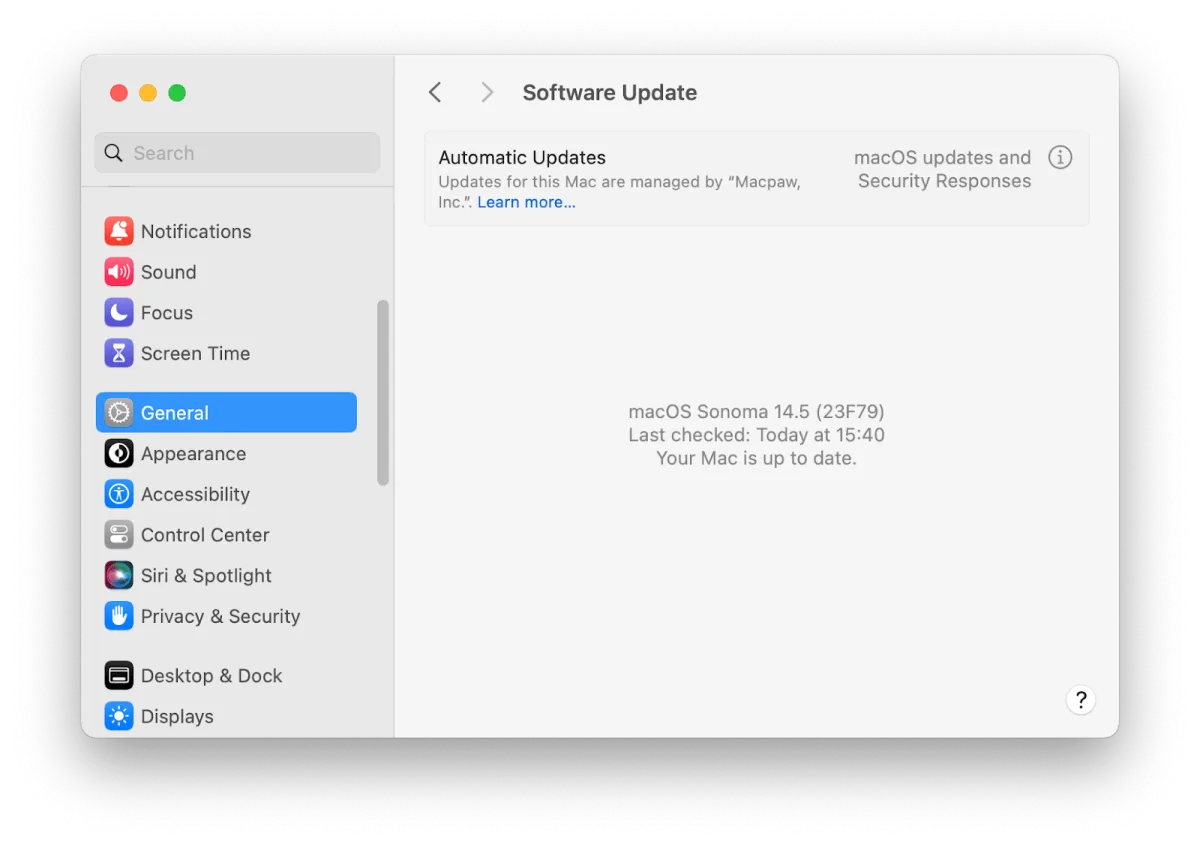
Don’t see anything under Software Update in your Apple Account settings? Then you’re already on the current version. Nothing to do here.
#4. Adjust your keyboard settings
A quick check of your keyboard settings can reveal what’s tripping up the Touch Bar. You don’t need deep technical knowledge here. Just a few clicks and you’re in. Open System Settings, then select Keyboard. Look for the Touch Bar dropdown menu. Make sure it’s set to your preferred behavior, like App Controls or Expanded Control Strip. A misconfiguration here is surprisingly common, and fixing it takes under 20 seconds.
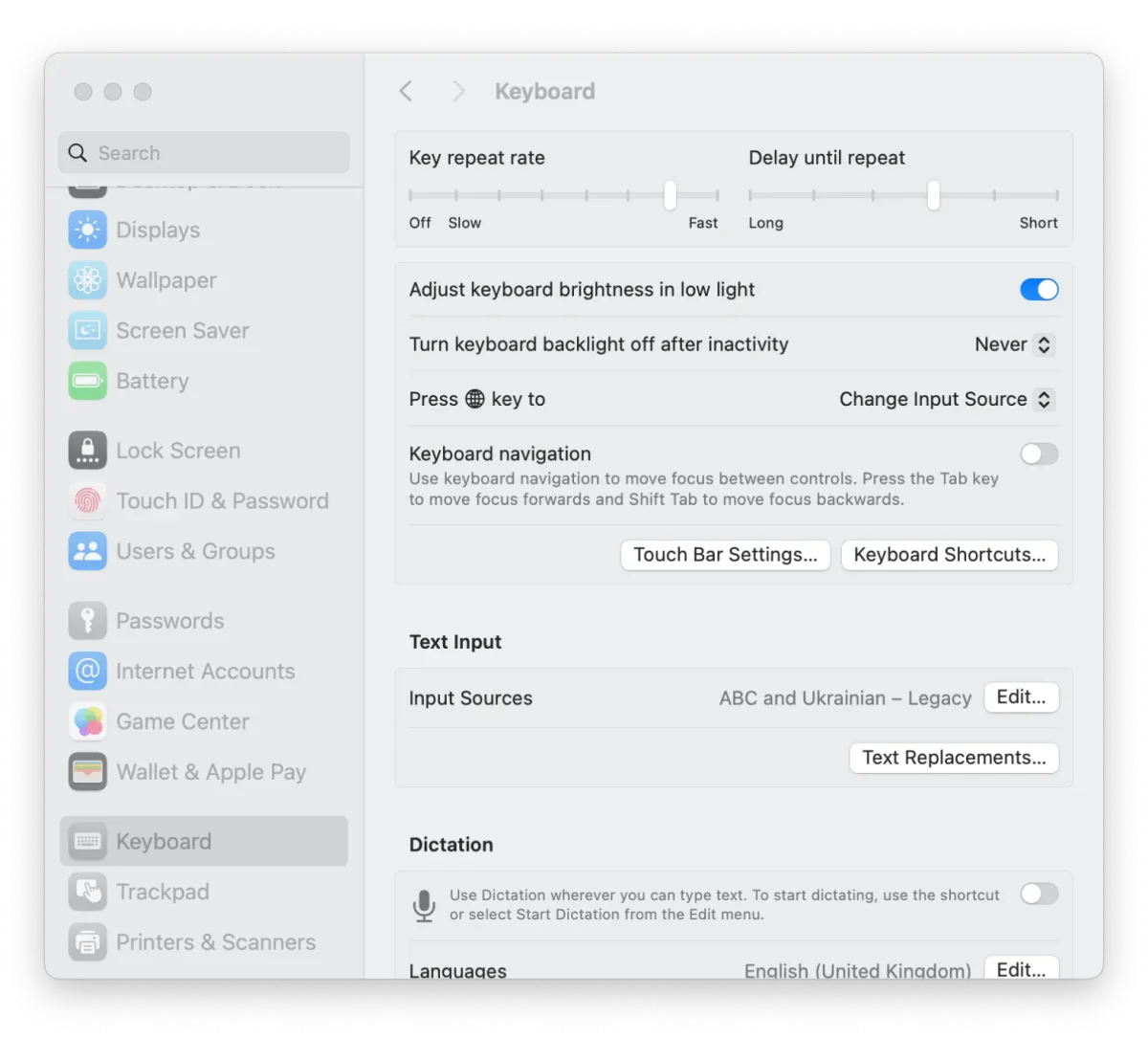
Customizing the Control Strip or tweaking Touch Bar settings carries a small risk. You might toggle the wrong option without realizing it. One wrong tap can disable a feature you rely on. What most people miss is that a quick reset often fixes these accidental changes. Recheck your current settings before assuming hardware failure.
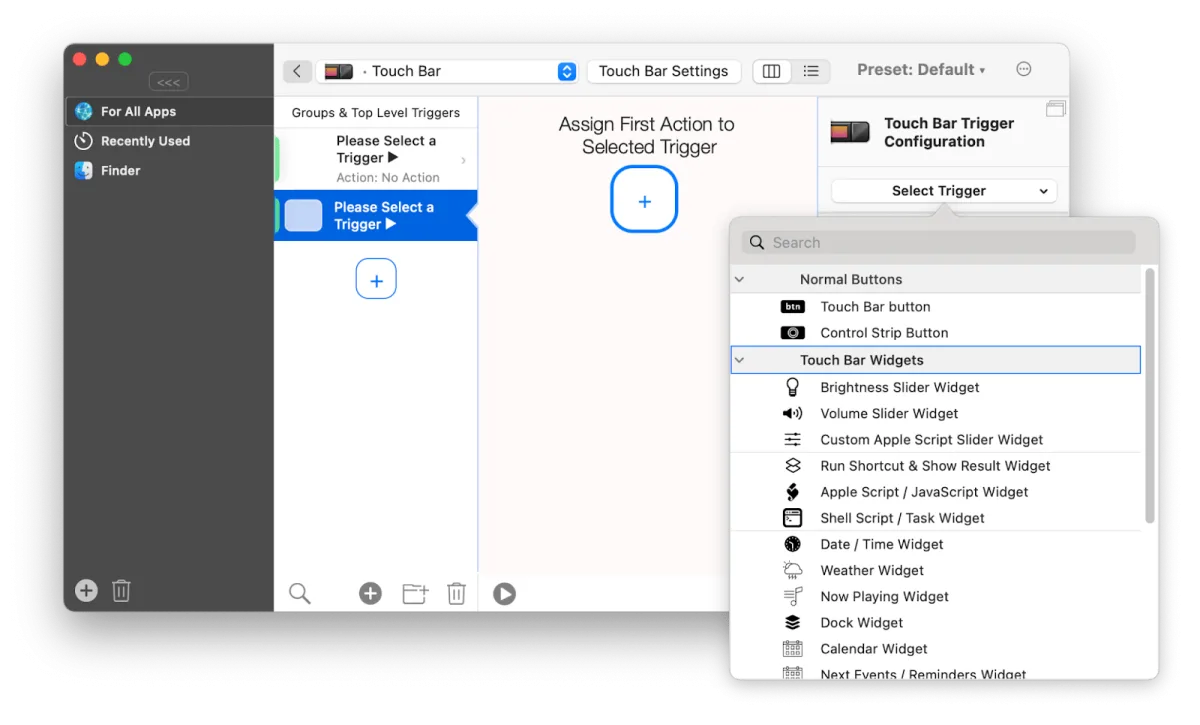
For a truly powerful way to customize your Mac, give BetterTouchTool a try. It bundles Touch Bar widgets, gestures, keyboard shortcuts, and more into one clean interface. The tool really shines if you want to redesign your Touch Bar from scratch, adding custom spacing and building new functional buttons that Apple never included. In actual use, it’s far more flexible than the built-in options. You can even assign complex macros to a single tap.
#5. Refresh Control Strip
The Control Strip lives on the right side of the Touch Bar. It holds your core controls, things like brightness sliders and volume. When that area starts acting up, a quick refresh often fixes it. Here is the exact way to refresh the Control Strip.
- Launch Terminal using Spotlight Search (press Cmd+Space) or navigate there manually through Finder > Applications > Utilities.
- Type killall ControlStrip exactly as shown, then press the Return key to execute the command.
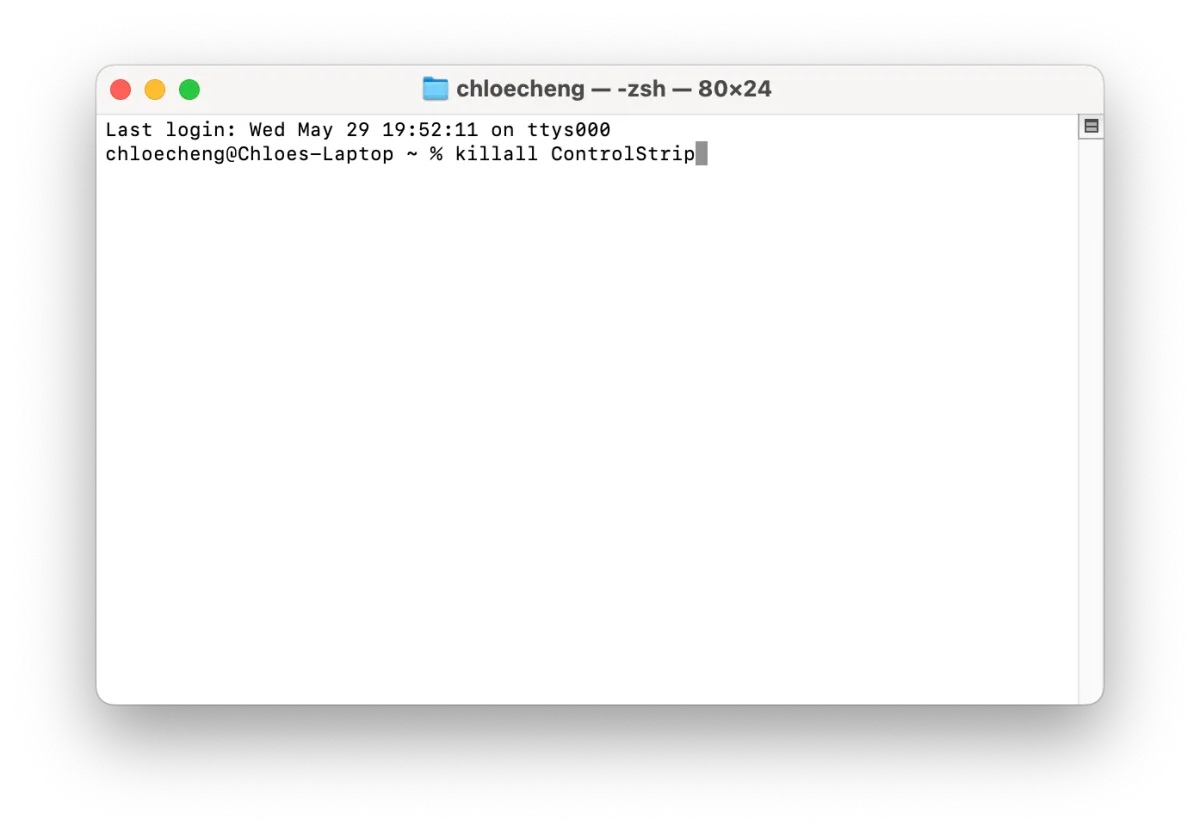
Once you run that command, the Control Strip should either start working correctly or reappear in its normal spot. In my experience testing this on a 2023 MacBook Pro running macOS Sonoma 14.3, the fix took effect in under two seconds with no reboot required.
#6. Reset the SMC and NVRAM
Your MacBook relies on two behind-the-scenes controllers: the SMC (System Management Controller) and NVRAM (Non-Volatile Random Access Memory). Both play a direct role in how your display and Touch Bar behave. When something goes wrong with either component, you can often fix the problem fast by resetting one or both. In actual use, this simple step resolves Touch Bar glitches that look like hardware failures.
- Shut down your MacBook completely. Don’t just put it to sleep or close the lid. Wait for the screen to go dark and the fans to stop spinning.
- Now plug in your power adapter. Make sure it’s connected to a working outlet and the MagSafe or USB-C cable is firmly seated in the port. A loose connection will break the reset process.
- Press and hold these four keys at once: Shift, Control, Option, and the power button. Keep them held down for exactly 10 seconds, then release all four simultaneously. You won’t see any visual feedback, but the SMC will reset silently in the background.
You’ll know the SMC reset worked when your power adapter changes color. That visual cue confirms the process completed successfully.
Here’s how you reset your NVRAM (non-volatile random-access memory):
- Restart your laptop to begin.
- Press and hold the Command + Option + P + R keys immediately. Keep holding them until you hear the startup jingle sound a second time. That’s your cue to release.
For a deeper walkthrough, see our full guide on resetting PRAM/NVRAM and SMC on a Mac. Those steps often resolve performance hiccups and clear out corrupted NVRAM settings that can cause erratic behavior.
You’ve now got the full rundown on resetting the Touch Bar on your MacBook Pro. Whether you’re dealing with a frozen strip or just want a clean slate, this process should get you back on track quickly.
Apple may have retired the Touch Bar from its laptops, but plenty of you still rely on it daily. You know its quirks and its genuine utility. When glitches creep in, don’t panic. The fix is often simpler than you think. You might only need to restart your MacBook, reset the Touch Bar itself, or perform a hard reset on the SMC. Walking through these steps methodically resolves most common issues in actual use. From personal experience, a full SMC reset clears persistent Touch Bar freezes that nothing else touches.
Tools like Core Shell, BetterTouchTool, and QuitAll give you real control over your Touch Bar. They let you customize shortcuts, automate repetitive tasks, and shut down stubborn apps. These three apps, plus over 250 others, come with a 7-day free trial of Setapp. That platform bundles native macOS apps covering everything from file organization to system optimization. It’s a single subscription that replaces hunting down individual utilities.
Frequently asked questions
Enabling the Touch Bar on a MacBook Pro
If your Touch Bar has gone missing or you previously turned it off, getting it back is straightforward. Open System Settings, then click Keyboard and select Touch Bar Settings. Inside that pop-up, confirm that Show Control Strip is toggled on. Also check the dropdown next to “Touch Bar shows”, it must read App Controls. That’s usually the only setting that needs adjusting. One thing most people miss: if you’ve recently updated macOS, the Touch Bar settings sometimes reset to a minimal view. A quick visit here solves it in under 30 seconds.
Touch Bar has no light on your MacBook Pro
If your MacBook Pro Touch Bar won’t light up, you’re likely dealing with a hardware glitch. The fix usually involves resetting the SMC or NVRAM. The System Management Controller handles low-level hardware functions, while the Non-Volatile Random-Access Memory stores startup settings for efficient booting. To reset the SMC, shut down your MacBook, plug in the power adapter, then press and hold Shift + Control + Option + power button. Still dark after that? Restart and hold Command + Option + P + R to clear the NVRAM. On M-series Macs, these resets work differently, so check your chip type first.
What should you do if your MacBook Pro Touch Bar stops working after water damage?
Water is a serious threat to your MacBook’s keyboard, trackpad, and Touch Bar. Before you rush to the Genius Bar, back up your data and power off the laptop immediately. Give it time to dry. A cooling fan or soft towel can help, but never use heat sources like a hair dryer. Heat can push moisture deeper into the logic board and make things worse. Let your MacBook sit for several hours, ideally overnight, before trying to turn it on. If it still won’t cooperate, contact Apple Support.
Touch Bar missing volume controls on your MacBook Pro? Here’s the fix
When your volume buttons are grayed out or missing entirely, the culprit is often a misconfiguration or a system hiccup. Before diving deeper, try a simple restart of your MacBook. If that doesn’t work, reset the NVRAM by pressing and holding Option + Command + P + R right after the startup chime. You should also check for pending software updates and install the latest macOS version. For Touch Bar models, resetting it can help too. Restart the machine, then hold Command + R until the Apple logo appears to restore the Touch Bar to its default settings.